KitchenAid vs Cuisinart Stand Mixers: Which Brand Fits You?
As an Amazon Associate we earn from qualifying purchases. Links on this page are affiliate links.
When you compare a KitchenAid vs cuisinart stand mixer, you see two reliable options for home baking. Both models feature tilt-head designs and metal construction for durability. They also include essential tools like a flat beater and dough hook. The main difference lies in their capacity and speed controls. One offers a larger bowl and more speed settings, while the other focuses on a classic 10-speed range with a standard 5-quart capacity. This guide breaks down the specs to help you decide.
Key differences
| Aspect | KitchenAid Artisan 5-Quart Tilt-Head Stand Mixer | Cuisinart 5.5-Quart 12-Speed Stand Mixer |
|---|---|---|
| Bowl Capacity | 5 Quart | 5.5 Quart |
| Speed Settings | 10 speeds | 12 Speed |
| Motor Wattage | not listed | 500-watt |
| Housing Material | Metal | Die-cast metal |
| Weight | 22.8 pounds | 18.4 pounds |
| Included Attachments | Flat beater, dough hook, whip, shield | Chef's whisk, dough hook, mixing paddle, splash guard |
Which one should you choose?
Choose KitchenAid Artisan 5-Quart Tilt-Head Stand Mixer if
- You prefer a classic 10-speed control range for simple tasks.
- You want a heavier unit that feels substantial on the counter.
- You need a mixer that mixes up to 9 dozen cookies in one batch.
Choose Cuisinart 5.5-Quart 12-Speed Stand Mixer if
- You need extra mixing capacity for larger dough batches.
- You want more speed options for precise texture control.
- You prefer a lighter machine that is easier to move.
Verdict: The KitchenAid Artisan suits you if you value a proven 10-speed system and a sturdy, heavier build. The Cuisinart model fits better if you need a slightly larger 5.5-quart bowl and finer speed adjustments. Choose the one that matches your typical batch size and speed preferences.
KitchenAid vs Cuisinart: Key Specs
Bowl Capacity
The Cuisinart SM-50NAS features a 5.5-quart stainless steel bowl, while the KitchenAid KSM150PS offers a 5-quart capacity. The extra half-quart on the Cuisinart allows for slightly larger batches, which can be helpful for big doughs. The KitchenAid bowl is also stainless steel and includes a comfortable handle. Both bowls are dishwasher safe, making cleanup easy. If you often mix large quantities of cookies or bread, the Cuisinart provides a bit more room. However, the difference is small enough that both handle standard home baking tasks well. You should choose based on whether that extra capacity is necessary for your typical recipes.
Speed Settings
Speed control is a key factor for precision mixing. The Cuisinart model provides 12 distinct speed settings, giving you more granular control over mixing intensity. The KitchenAid Artisan offers 10 speeds. While both ranges cover the essentials from slow stirring to high whipping, the additional two speeds on the Cuisinart allow for finer adjustments. This can be useful when incorporating delicate ingredients or achieving specific textures. The KitchenAid speeds are sufficient for most tasks, but the Cuisinart offers a slightly wider range for those who want precise control. If you prefer more options for fine-tuning your mixing process, the Cuisinart has the advantage here.
Motor Power
Motor wattage indicates the power available for heavy tasks. The Cuisinart SM-50NAS is equipped with a 500-watt motor. The KitchenAid KSM150PS specifications do not list a specific wattage, so we cannot directly compare power output numbers. However, both mixers are built with metal construction to handle standard mixing duties. The Cuisinart's stated wattage suggests robust performance for dough and thick batters. Without the KitchenAid's wattage data, we cannot declare a clear winner on raw power. You should consider that both brands are reliable, but the Cuisinart provides more explicit data on its motor strength for heavy-duty use.
Build Material
Durability often depends on the housing material. The KitchenAid Artisan features a durable metal construction that is built to last. The Cuisinart uses die-cast metal for its housing, which is also known for strength and stability. Both materials provide a solid feel and resist wobbling during operation. The KitchenAid design includes 59 touchpoints around the bowl for thorough mixing, a specific engineering detail not mentioned for the Cuisinart. The Cuisinart includes a splash guard with a pour spout, while the KitchenAid includes a pouring shield. Both builds are high quality, making this a tie in terms of overall material quality and expected longevity.
Included Attachments
Both mixers come with essential tools to start baking immediately. The KitchenAid includes a coated flat beater, a coated dough hook, a 6-wire whip, and a pouring shield. The Cuisinart provides a chef’s whisk, a dough hook, a flat mixing paddle, and a splash guard with a pour spout. The KitchenAid attachments are coated, which may help prevent scratching the stainless steel bowl. The Cuisinart includes a recipe book and instruction manual. Both sets cover the basics for cookies, bread, and whipped cream. The KitchenAid offers a wire whip, while the Cuisinart offers a chef’s whisk. These are functionally similar, resulting in a tie for included value.
Dimensions and Weight
Counter space and portability matter for many users. The KitchenAid Artisan measures 16 inches wide, 16 inches long, and 11 inches high, weighing 22.8 pounds. The Cuisinart is 14.2 inches long, 7.87 inches wide, and 14.1 inches high, weighing 18.4 pounds. The Cuisinart is significantly lighter, making it easier to move if needed. However, the KitchenAid is wider and longer, potentially taking up more counter footprint. The Cuisinart is taller. If you have limited counter space, the Cuisinart’s narrower width might be preferable. If weight is a concern, the Cuisinart is the lighter option. Both are substantial appliances, so measure your space before deciding.
Attachment Compatibility
Expandability is a major benefit of stand mixers. The KitchenAid features a power hub that supports more than 15 optional attachments, turning the mixer into a culinary center. This includes tools for pasta, grinding, and more. The Cuisinart also has one power outlet for optional attachments, including a pasta extruder, roller, ice cream maker, and meat grinder. Both brands offer a wide range of accessories. The KitchenAid explicitly mentions a larger variety of available tools. The Cuisinart supports specific specialized tools like a spiralizer. Both are compatible with add-ons, but the KitchenAid ecosystem is noted for its extensive options, giving it a slight edge here.
Which Stand Mixer Fits Your Baking?
Bakers needing larger batch capacity
The Cuisinart SM-50NAS offers a 5.5-quart stainless steel bowl. This extra half-quart capacity helps when mixing large batches of dough or multiple cookies at once. The 500-watt motor supports these heavier loads. You get a polished bowl that is durable and easy to clean. The tilt-back head provides clear access for adding ingredients during mixing.
Users wanting precise speed control
The Cuisinart mixer includes 12 speed settings. This gives you more granular control compared to the KitchenAid's 10 speeds. You can fine-tune the mixing action for delicate tasks like whipping cream or heavy tasks like kneading bread. The die-cast metal construction adds stability during operation. This precision helps ensure consistent results across various recipes and ingredient textures.
Bakers preferring a classic design
The KitchenAid Artisan features a traditional tilt-head design. Its metal housing is built to last. The 5-quart bowl is sufficient for most home baking needs. You can choose from many color options to match your kitchen style. The included pouring shield helps keep ingredients contained. This model offers a familiar, reliable interface for everyday mixing tasks without complex features.
The products compared

KitchenAid Artisan 5-Quart Tilt-Head Stand Mixer
Best for: Versatile home baking and attachment use
- Bowl Capacity
- 5 Quart
- Speed Settings
- 10 speeds
- Head Type
- Tilt-Head
- Included Attachments
- Coated flat beater, dough hook, whip
- Housing Material
- Metal
- Color
- White
View on Amazon: KitchenAid Artisan 5-Quart Tilt-Head Stand Mixer Affiliate link
The KitchenAid Artisan KSM150PS is a 5-quart tilt-head stand mixer built with a metal housing. It offers 10 speed settings and includes a stainless steel bowl, flat beater, dough hook, wire whip, and pouring shield. This model fits small to large batches, handling up to 9 dozen cookies at once. Its 16-inch width and 22.8-pound weight provide stability. You will appreciate the tilt-head design for easy ingredient access and the power hub for optional attachments.
Pros
- Metal housing for durable construction
- 10 speed settings for varied tasks
- 5-quart stainless steel bowl capacity
- Includes flat beater, dough hook, whip, and shield
Cons
- Tilt-head design limits heavy dough handling compared to bowl-lift models
- 22.8-pound weight makes it less portable than lighter options
- No power outlet on the back for easy attachment storage
Good fit if
- You need a versatile mixer for cookies, bread, and whipped cream
- You want to use optional attachments via the power hub
- You prefer easy access to the bowl for adding ingredients
Skip if
- You frequently mix large batches of heavy bread dough
- You require a bowl-lift design for extra stability
- You need a compact mixer under 15 inches wide
Verdict: KitchenAid Artisan 5-Quart Tilt-Head Mixer is a solid choice for home bakers who value versatility and attachment compatibility. It suits those who mix moderate quantities and prefer the convenience of a tilt-head mechanism.
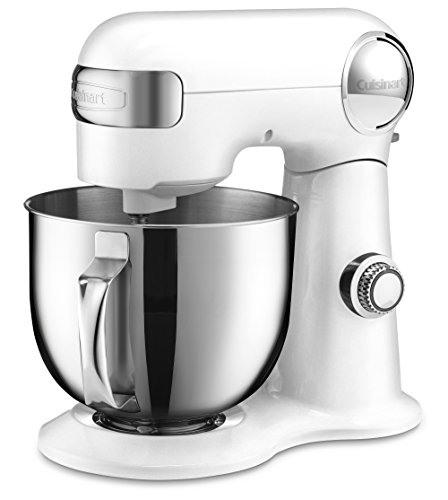
Cuisinart 5.5-Quart 12-Speed Stand Mixer
Best for: bakers needing larger bowl capacity
- Bowl Capacity
- 5.5 Quart
- Speed Settings
- 12 Speed
- Motor Wattage
- 500-watt
- Head Type
- Tilt-back
- Included Attachments
- Chef's whisk, dough hook, mixing paddle
- Housing Material
- Die-cast metal
View on Amazon: Cuisinart 5.5-Quart 12-Speed Stand Mixer Affiliate link
The Cuisinart 5.5-Qt Stand Mixer offers a 500-watt motor and 12 speed settings for precise control. Its 5.5-quart stainless steel bowl holds more than the 5-quart KitchenAid Artisan. The die-cast metal housing provides stability during operation. This model includes a tilt-back head and a power outlet for attachments. It suits bakers who need extra capacity and variable speed options.
Pros
- 5.5-quart stainless steel bowl offers extra capacity
- 500-watt motor provides reliable power
- 12 speed settings allow for fine control
- Die-cast metal construction ensures durability
Cons
- Heavier build at 18.4 pounds
- Manual operation mode lacks digital controls
- 500-watt motor is less powerful than some competitors
Good fit if
- You need a bowl larger than 5 quarts
- You prefer manual speed control over digital presets
- You want a durable metal construction
Skip if
- You require a compact footprint under 14 inches in height
- You need a motor stronger than 500 watts
- You prefer a lighter appliance for storage
Verdict: Cuisinart 5.5-Qt Stand Mixer fits users who prioritize bowl capacity and manual precision over digital features or compact size. It is a solid choice for those baking larger batches regularly.
Specifications side by side
| Spec | KitchenAid Artisan 5-Quart Tilt-Head Stand Mixer | Cuisinart 5.5-Quart 12-Speed Stand Mixer |
|---|---|---|
| Bowl Capacity | 5 Quart | 5.5 Quart |
| Speed Settings | 10 speeds | 12 Speed |
| Motor Wattage | not stated | 500-watt |
| Head Type | Tilt-Head | Tilt-back |
| Included Attachments | Coated flat beater, dough hook, whip | Chef's whisk, dough hook, mixing paddle |
| Housing Material | Metal | Die-cast metal |
| Application | not stated | Dough |
| Operation Mode | not stated | Manual |
| Color | White | Color: White Linen |
| Size | 5 Quart | 5.5 Quart |
| Dimensions | 16 × 16 × 11 inches | 14.2 × 7.87 × 14.1 inches |
| Weight | 22.8 pounds | 18.4 pounds |
| Model | KSM150PSWH | SM-50NAS |
Frequently asked questions
Which stand mixer is lighter to move around the kitchen?
The Cuisinart SM-50NAS is the lighter option. It weighs 18.4 pounds, making it easier to lift and store than the KitchenAid model. The KitchenAid Artisan 5-Quart Tilt-Head Stand Mixer weighs 22.8 pounds. You will notice the difference if you move your mixer frequently for counter space or storage.
Does the KitchenAid mixer have more speed settings than the Cuisinart?
No, the Cuisinart SM-50NAS offers more manual speed control. It features 12 distinct speed settings for precise mixing adjustments. The KitchenAid Artisan model does not list a specific number of speeds in its published specifications. You should check the control panel on the KitchenAid unit to see its exact configuration.
How wide is the Cuisinart stand mixer compared to the KitchenAid?
The Cuisinart SM-50NAS is narrower than the KitchenAid Artisan. The Cuisinart measures 7.87 inches in width. The KitchenAid Artisan 5-Quart Tilt-Head Stand Mixer measures 16 inches wide. This makes the Cuisinart a better fit for tighter counter spaces or smaller kitchen cabinets.
Which mixer has a taller bowl capacity for large batches?
The Cuisinart SM-50NAS has the larger bowl capacity. It features a 5.5-quart bowl, which is half a quart larger than the KitchenAid. The KitchenAid Artisan 5-Quart Tilt-Head Stand Mixer holds 5 quarts. If you often bake large batches of cookies or bread, the Cuisinart offers more volume.
Are both mixers tilt-head designs for easy bowl access?
Yes, both models feature a tilt-head design. This mechanism allows you to tilt the head back to access the bowl and attachments easily. The KitchenAid Artisan 5-Quart Tilt-Head Stand Mixer and the Cuisinart SM-50NAS both use this style. It is convenient for adding ingredients or changing tools during mixing.
What is the height difference between the two mixers?
The Cuisinart SM-50NAS is taller than the KitchenAid Artisan. The Cuisinart stands 14.1 inches high. The KitchenAid Artisan 5-Quart Tilt-Head Stand Mixer is 11 inches high. You need to ensure your kitchen cabinets have enough clearance, especially if you plan to use attachments that extend above the bowl.